
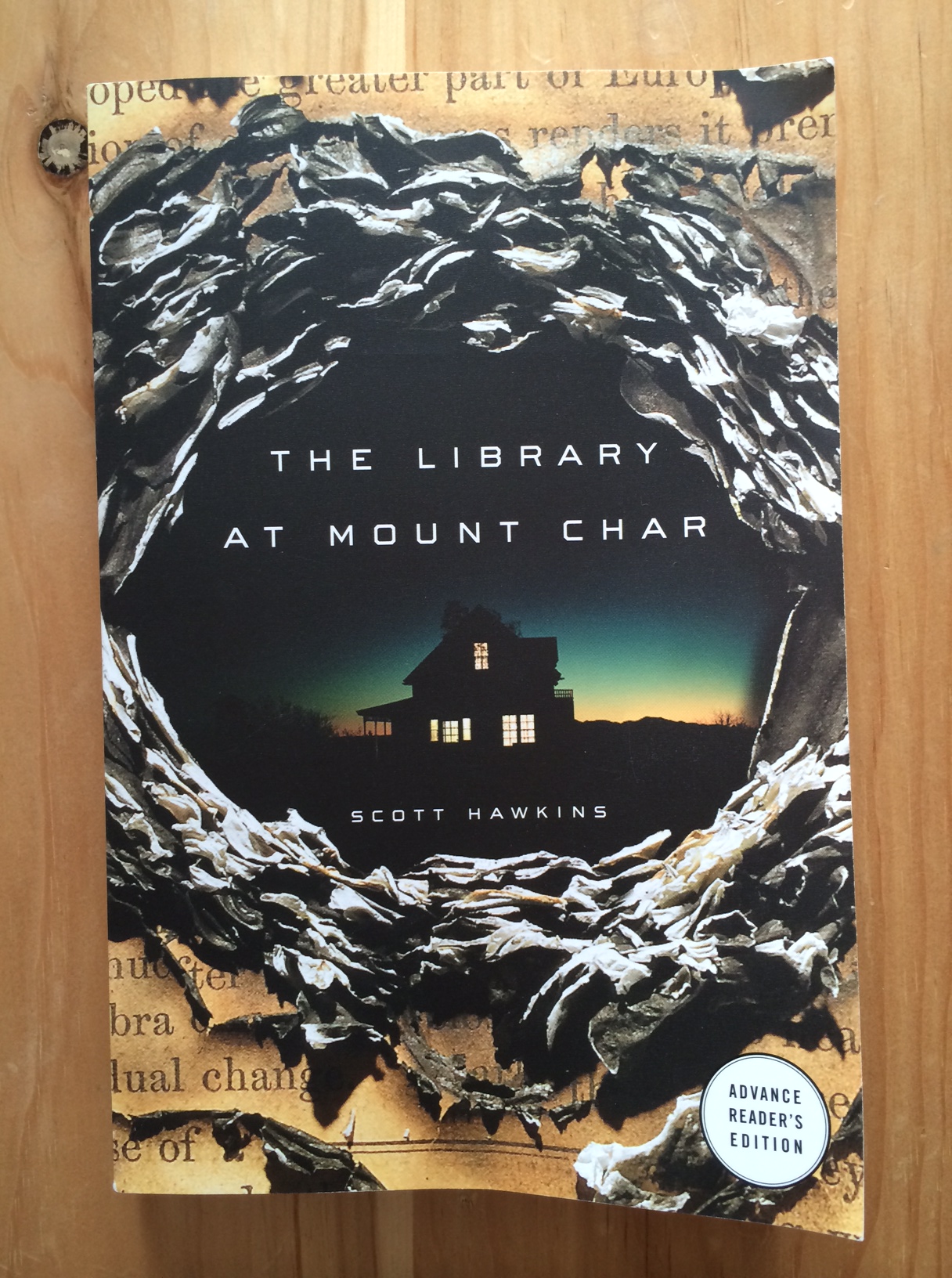
To prepare for writing my own novel, I thought it wise to delve into books of a similar genre. The first recommended book on my list was “The Library at Mount Char” by Scott Hawkins. The story, told in a third-person omniscient narrative, unfolds in late ’90s or post-2000 America. The first character we meet is Carolyn, a self-proclaimed librarian who reveals extraordinary abilities within the first few chapters. Carolyn and her eleven uniquely supernatural siblings are on a quest to find their adoptive father. Along the way, she enlists the aid of Steve, an unsuspecting man who wants no part in her extraordinary world.
From the onset, it’s evident that Hawkins wrote this tale with the reader in mind. Within a few pages, I could tell this author was intent on entertaining, and he certainly fulfilled that promise. The narrative skillfully arouses curiosity and invests the reader in the storyline. Though an exceptional character, Carolyn remains relatable as she grapples with emotions of loss, fear, pride, and anger. Steve, however, struck me as more relatable. His world is turned upside down by this enigmatic woman in bicycle shorts and leg warmers, and yet, amidst the chaos, his thoughts often comically return to his dog waiting at home.
The character development is solid in “The Library at Mount Char.” Each character has strengths and weaknesses that consistently impact the story. Carolyn, while extraordinary, never reaches a point of incredulity. Steve remains faithful to his character and is a consistent foil for Carolyn throughout the narrative.
When it comes to antagonists, there are surprising shifts in conflict midway. Hawkins introduces new threats after the novel’s halfway mark, but not without laying the groundwork in the story’s earlier parts. The new conflicts never feel like shocking additions purely for the sake of it.
The author deftly employs narrative flashbacks to answer pivotal questions: Who is Carolyn? What is her father like? How did she gain her abilities? What drove her brother David to such extremes? Appropriately inserted flashbacks maintain the sense of urgency without becoming unwelcome exposition.
However, I wouldn’t go as far as to label the book a masterpiece. It hits a lull when one antagonist is removed from the narrative, losing some momentum in what feels like a 50-page mini-resolution. While essential to the story and character development, these scenes answer questions I was content leaving unanswered. For a moment, the tension dissipates after the second act, making the beginning of the third feel like its own small, three-act story.
Upon finishing the book, I felt satisfied with the investment of my time. The ending pleased me. While there are themes of power, responsibility, and sacrifice, I can’t identify a single major takeaway. From the outset, I saw this book as entertainment for the reader, and it delivered.
I approached “The Library at Mount Char,” seeking a blend of fantasy and horror. The book offered the perspective I sought and was entertaining enough to keep me engaged. Simply put, I enjoyed it. If you’re a fan of supernatural stories with a hint of horror, I believe you’ll appreciate it too.
Should you read this book, or if you have already, I’d love your thoughts on the themes. Did the slackened conflict two-thirds through the book almost make you put it down? What are your thoughts on the protagonists and antagonists? Can a character embody both roles throughout a story? I welcome your opinions.
 Manic Musings