
/I’ve been extremely busy getting things done lately; there are so many topics I could discuss in blog posts. However, I keep forgetting to write. Isn’t it strange how success in one area can lead to neglect in another? But that’s just life, isn’t it?
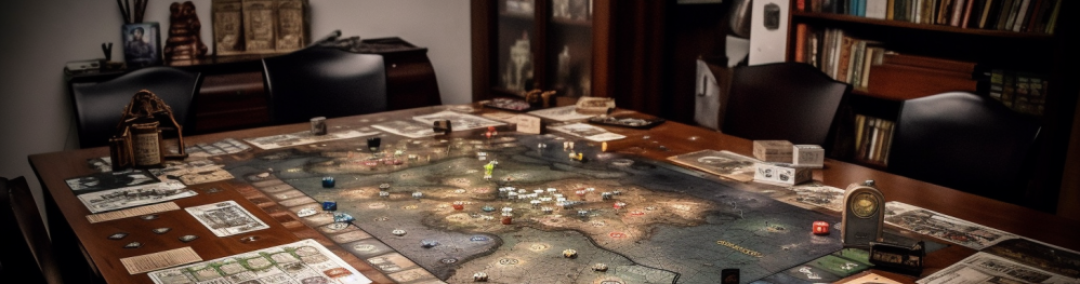
/So, what have I accomplished? First and foremost, I’m going to talk about the biggest thing today. Three years ago, I sat down at the onset of the COVID-19 quarantine with the goal of writing a book about the world where my Dungeons and Dragons game takes place. The concept was to create a narrative tool and a fictional atlas about the people, places, cultures, and more that I had created for our games. It included details about religious structures, governments, a complex economic system, and so forth. There were lessons learned and things I would do differently, but I am proud of my finished product nonetheless.
/Let me start by saying that if you’re interested in writing any type of fiction, I would strongly advise against doing what I did. I fell prey to ‘world builder’s syndrome,’ which hindered me from creating something that would be appreciated by a wider range of people. Few people would sit down to read an atlas, whether it’s about a fictional world or not. I jumped into the deep end, and in hindsight, that was a mistake. What I ended up creating was a 366-page fully illustrated beast of a writing prompt. I could flip to any page, and there are snippets of fictional people and places begging to be written about, but nothing in there could be called a complete story. It’s niche, and in retrospect, it didn’t need to be written, especially considering I’m not currently running any D&D games.
/The book is about a world I call ‘Amarth.’ I derived the name from the literary works of J.R.R. Tolkien, whose work is of course credited with the genesis of the modern high fantasy genre. In the language of Tolkien’s Elves, Sindarin, ‘Amarth’ means ‘Doom.’ Initially, my Amarth was designed to be a very unfriendly world, with strong influences from dark cosmic horror. Orbiting high above the world of Amarth is a shattered celestial, a cosmic titan more powerful than the gods of the realm, now dead and rotting, resembling a crumbling moon and mass of dead flesh. This dead celestial, known as ‘Zaal’Abarm,’ casts its influence across the world of Amarth, causing madness and mutating the wildlife into nightmarish aberrations that defy nature itself.
/Over time, Amarth began to evolve. As I edited and toyed with my creation, I realized that the cosmic horror element was too intense for a broader audience, so I infused elements of wonder and hope to inspire players and heroes. I needed a balance for the dark, and I found that balance in the whimsical wonders of steampunk. I introduced machines, steam constructs, and contraptions that blended magic and science. I married magic and sci-fi against the backdrop of eldritch nightmares. While I’m not the first to do this, it’s also not an overdone trope, allowing more room to play without the risk of clichés.
/Amarth took shape. With maps, cultures, creatures, and more of my own design, I created something of which I feel immensely proud. I look forward to using it in future games and as the groundwork for a fantasy novel I plan to write next. Inspired by my wife’s original character, I think I’m going to follow up with a story of a young half-elf, Allondria, and her hero’s journey from being a nobody to an up-and-coming steampunk pirate.
 Manic Musings